2026-11-10 ·
Crawl Space Water Damage: Signs Homeowners Miss
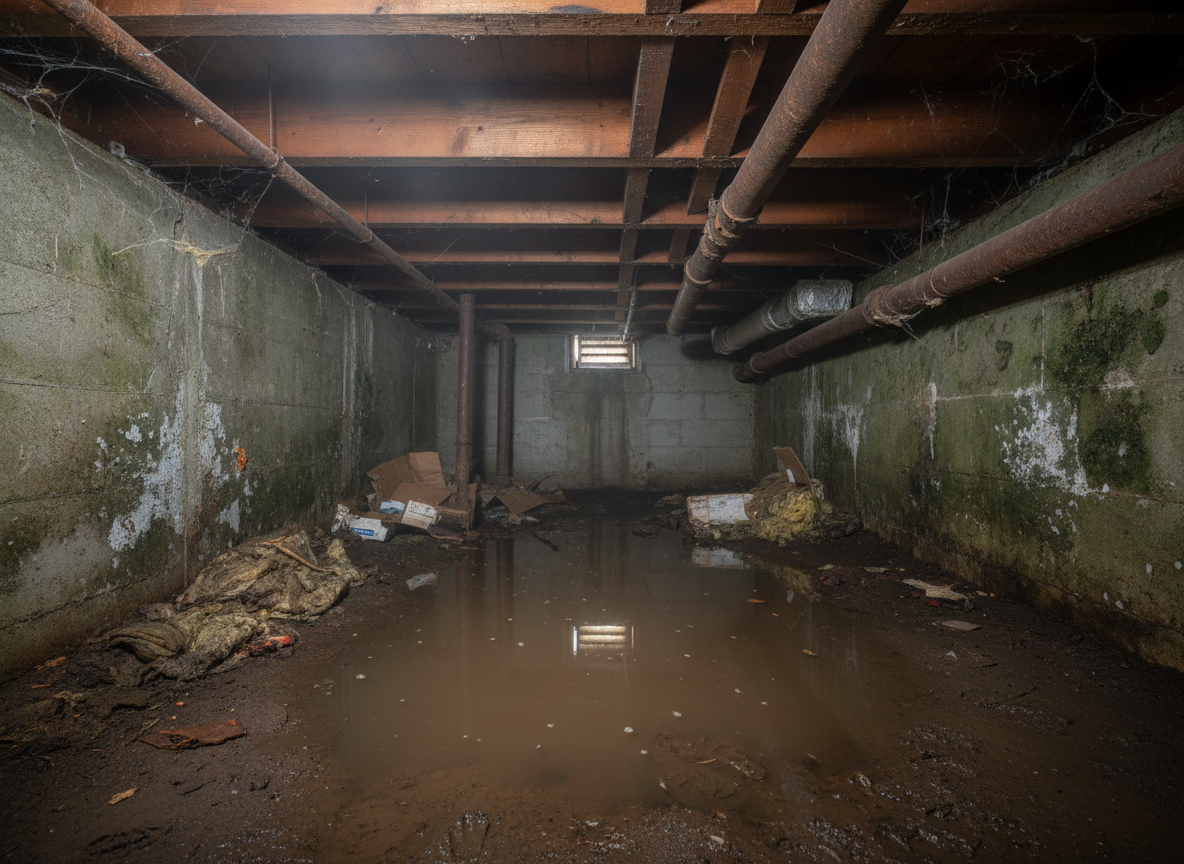
Homeowners in Redwood City typically overlook crawl space water damage until moisture has persisted for 3–6 weeks, allowing mold colonies to establish or floor joists to soften. The mild Mediterranean climate with cool, foggy summers keeps relative humidity high enough that even small leaks from plumbing or poor drainage around foundations in North Fair Oaks or Woodside Plaza stay hidden below living spaces.
Early Odor and Air Quality Clues
Musty smells that intensify on foggy mornings often originate from crawl spaces rather than bathrooms or kitchens. In Redwood City homes built before 1970, especially those near the Redwood City Courthouse or Sequoia Station, vents allow cool, moist air from the bay to circulate under floors, carrying odors upward through HVAC returns. Residents in Downtown Redwood City frequently report these smells strongest in the early evening when temperatures drop and air movement slows. Checking for condensation on ductwork or insulation during these periods reveals moisture that has not yet reached visible levels in living areas. Persistent odors after rain events in nearby San Mateo or Menlo Park usually point to standing water trapped against the foundation rather than surface spills.
Structural and Flooring Indicators
Sagging or bouncy floors in the center of rooms often trace back to water-softened joists in the crawl space below. Older homes in Edgewood and Redwood Shores commonly feature 2x8 or 2x10 floor systems that weaken after repeated wetting from poor grading or clogged French drains. Doors that begin sticking or cabinets pulling away from walls can signal foundation movement caused by soil expansion under the crawl space. Homeowners who notice these changes after atmospheric river storms should inspect for dark staining on sill plates or efflorescence on concrete piers before the damage spreads to finished surfaces. Early detection prevents the need for extensive crawl space water damage repairs that involve sistering joists or replacing subflooring.
Moisture Sources Specific to the Peninsula
Fog drip and poor site drainage combine in San Mateo County to keep crawl spaces damp even without major storms. Properties in Woodside Plaza and North Fair Oaks sit on clay-heavy soils that hold water against stem walls for days after light rain. Irrigation overspray near foundations or blocked downspouts around Cañada College-area homes frequently directs water under the structure. Older vented crawl spaces allow this moisture to linger because cross-ventilation drops during the cool, foggy summer months. Checking soil moisture 12 inches from the foundation after a typical foggy week often shows readings above 20 percent, a level that supports mold growth within 48 hours.
Health and Secondary Damage Risks
Mold growth in crawl spaces can migrate through HVAC systems into living spaces within 2–4 weeks when humidity stays above 60 percent. Residents in Belmont and Menlo Park report increased allergy symptoms during summer when fog keeps crawl spaces saturated. Wood rot on girders and posts reduces load capacity, leading to noticeable floor deflection after 8–12 years of repeated wetting. Mold remediation becomes necessary once colonies exceed 10 square feet on insulation or framing. Ignoring these signs also risks electrical shorts if wiring runs through the moist area.
Immediate Steps and Professional Inspection
Document any odors or floor movement, then schedule a crawl space inspection before the next fog cycle. Removing stored items and improving ventilation can slow growth but does not address the water source. For homes showing multiple signs, professional extraction and drying equipment rated for 150–200 pints per day prevents further structural loss. Redwood City Water Restoration remains available around the clock to respond when homeowners notice these overlooked indicators. Review coverage details in Does Homeowners Insurance Cover Water Damage in California? and learn first-response actions in What to Do in the First 24 Hours After Water Damage to limit secondary issues.