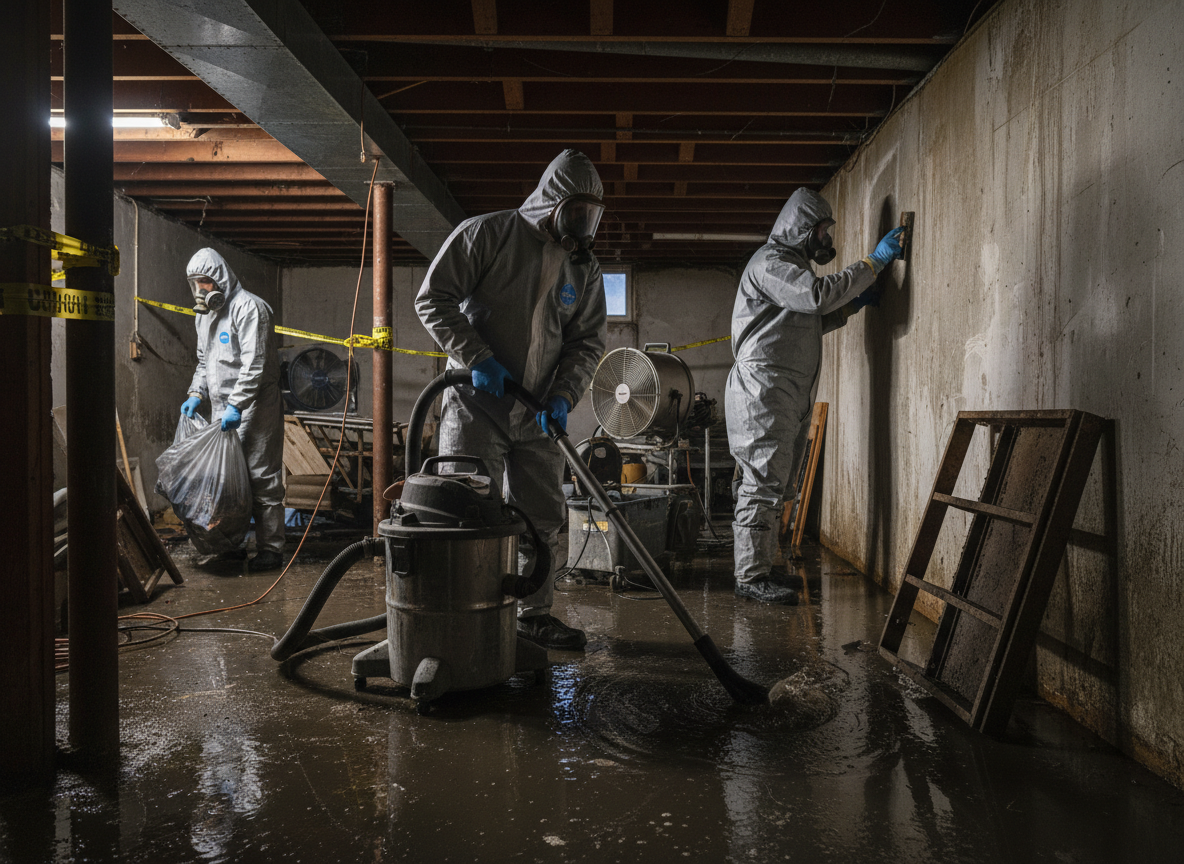
Sewage backups in Redwood City often stem from aging clay pipes common in North Fair Oaks and Edgewood homes built before the 1970s. These lines are vulnerable to root intrusion from mature trees near Cañada College and Woodside Plaza, allowing groundwater intrusion during the cool, foggy summers typical of San Mateo County. Technicians must isolate affected zones quickly to prevent cross-contamination into living spaces, using negative air machines and antimicrobial agents rated for Category 3 water. Failure to address hidden moisture behind baseboards or under slabs in these older builds frequently leads to recurring mold issues months later.
Redwood Shores properties near the lagoon face different challenges from tidal influences and higher water tables that push sewage back through floor drains during heavy winter rains. Extraction here requires submersible pumps rated for viscous waste plus careful documentation for insurance adjusters familiar with Belmont and Menlo Park claims. Crews remove all porous materials like carpet padding and drywall below the flood line, then apply hospital-grade disinfectants followed by moisture mapping with thermal imaging to confirm drying in the area's high-humidity climate before reconstruction begins.
San Mateo County health codes require full removal of contaminated materials rather than surface cleaning alone when sewage contacts living areas. In Downtown Redwood City apartments and mixed-use buildings, this often means cutting out sections of subflooring around plumbing chases that run through multiple units. Technicians coordinate with local waste haulers for proper disposal of extracted material and maintain chain-of-custody logs that protect both the property owner and neighbors in dense blocks near Sequoia Station.
Technician insight
In Redwood City, the thing that catches most people out with Sewage Cleanup is the old clay sewer lines running under North Fair Oaks homes—tree roots from the neighborhood's established landscaping push through during our mild winters and create repeat backups that surface cleaning alone never fixes.
Redwood Shores Lagoon Backup
A homeowner in Redwood Shores reported sewage rising through a floor drain after winter rains. Inspection showed tidal pressure forcing material from the municipal line into the slab. Crews extracted waste, removed saturated subfloor sections, disinfected the space, and ran drying equipment until readings confirmed safe levels.
Sewage Cleanup Services We Offer
✓Raw Sewage Extraction
Rapid removal of standing sewage from basements and crawlspaces using commercial pumps suited to Redwood City's older plumbing systems.
✓Contaminated Material Removal
Safe disposal of saturated drywall, carpet, and insulation in North Fair Oaks homes where root-damaged clay pipes are common.
✓Sewer Backup Sanitization
Full disinfection of affected surfaces in Redwood Shores properties using EPA-registered agents after lagoon-area overflows.
✓Floor Drain Overflow Cleanup
Targeted cleaning and drying for kitchens and bathrooms in Downtown Redwood City buildings prone to municipal line surges.
✓Crawlspace Sewage Remediation
Vapor barrier installation and moisture control in Edgewood homes where high water tables push waste into underfloor areas.
Sewage Cleanup Cost in Redwood City, CA
| Service | Typical Range | What Affects It |
|---|---|---|
| Initial Assessment | Free | Includes moisture readings in Redwood City homes |
| Sewage Extraction | $800–$2,200 | Varies by volume and access in North Fair Oaks crawlspaces |
| Sanitization and Drying | $1,200–$3,500 | Includes equipment time needed in foggy summer conditions |
| Material Removal | $600–$1,800 | Based on amount of drywall and flooring in older stock |
Ranges are typical for Redwood City, CA and confirmed with an exact written quote before any work starts.
How it works
- 1
Site Assessment
Technician inspects the property, identifies contamination boundaries, and checks for hidden moisture in older San Mateo County construction.
- 2
Extraction and Removal
Standing sewage is pumped out and all porous materials below the water line are removed to prevent long-term health risks.
- 3
Cleaning and Disinfection
Non-porous surfaces receive antimicrobial treatment while negative air machines contain odors and particulates.
- 4
Drying and Verification
Industrial drying equipment runs until moisture readings meet industry standards, confirmed with thermal imaging in foggy local conditions.
Pricing
Costs depend on square footage affected, depth of contamination, and whether older plumbing requires additional access work.